Use case

Secure your organizational data in Teams and SharePoint

Use SProbot's sharing links cleanup to prevent sensitive information in Teams and SharePoint workspaces from being accidentally shared internally and externally.

Your pain: People accidentally share sensitive information

Using the share button in Teams and SharePoint is super easy. Microsoft makes it as seamless as possible to encourage collaboration, but this comes at a data security cost.

Most unwanted sharing (both internally and externally) isn't intentional, it's simply a result of people working under pressure, without awareness of the implications, following the path of least resistance.

Solution step 1: Review and lock down sites with risky external sharing and lack of ownership

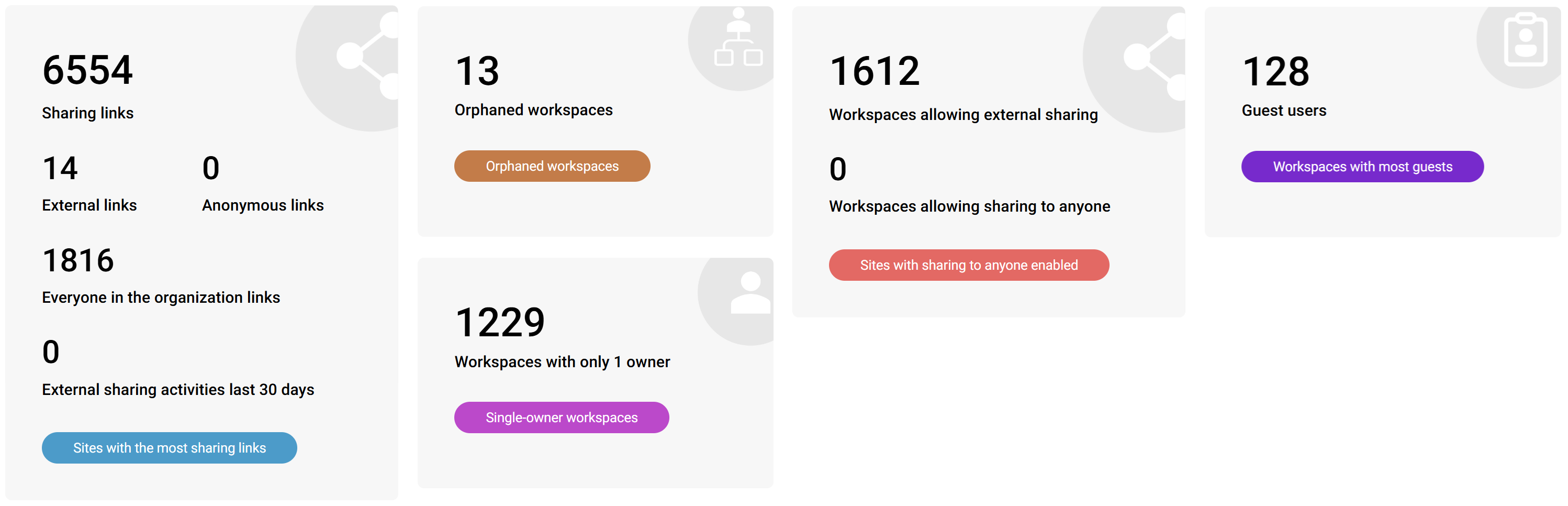
Using SProbot's Health Check and Reviews, you can quickly identify sites which place sensitive content at risk of being overshared.

Icon of a green check mark

Identify sites with risky external sharing settings

Icon of a green check mark

Assign ownership to orphaned, unmanaged sites

Why you need to optimise your SharePoint storage and security

Because Microsoft 365 makes it so easy to create sites and teams, storage fills up with old versions of large files and content nobody has opened in years, while sharing links and guest access go unreviewed. SProbot shows you the storage savings in every site and cleans them up in bulk, without scripts, and reports on the sharing and ownership risks across your tenant.

Stop content sprawl

See the storage savings in every site, along with orphaned, duplicate-named and inactive sites, in one place. Archive what's no longer needed in bulk instead of one site at a time.

Save time and storage

Trim versions of active large files and archive inactive files across many sites at once. Spend about 15 minutes in your tenant, start the bulk jobs, then let them run.

Increase data security

Find the sites with the most sharing links and guest users, and the sites with no owner or only one. Stop Copilot and search from surfacing sensitive sites by applying Restricted Content Discovery in bulk.

Solution step 2: Clean up unwanted sharing links

Get the most important details per link, then delete links which are risky or no longer relevant.

Icon of a green check mark

Get a full view of link details

Icon of a green check mark

Filter to risky scopes

Icon of a green check mark

Delete links individually or in bulk

Why you need to optimise your SharePoint storage and security

Because Microsoft 365 makes it so easy to create sites and teams, storage fills up with old versions of large files and content nobody has opened in years, while sharing links and guest access go unreviewed. SProbot shows you the storage savings in every site and cleans them up in bulk, without scripts, and reports on the sharing and ownership risks across your tenant.

Stop content sprawl

See the storage savings in every site, along with orphaned, duplicate-named and inactive sites, in one place. Archive what's no longer needed in bulk instead of one site at a time.

Save time and storage

Trim versions of active large files and archive inactive files across many sites at once. Spend about 15 minutes in your tenant, start the bulk jobs, then let them run.

Increase data security

Find the sites with the most sharing links and guest users, and the sites with no owner or only one. Stop Copilot and search from surfacing sensitive sites by applying Restricted Content Discovery in bulk.

See how SProbot can help you secure your data

We'll show you how to proactively monitor, report on issues, and take action to reduce oversharing.

Get a demo