Answer in brief
SharePoint storage is included with Microsoft 365, but your available capacity depends on your tenant allocation and licensing. When organisations approach their storage limit, they can either purchase additional storage or reduce consumption through cleanup and archiving.
Before buying additional storage, it is worth identifying how much capacity could be reclaimed through site cleanup, inactive file reviews and version management.
- SharePoint storage is allocated at tenant level.
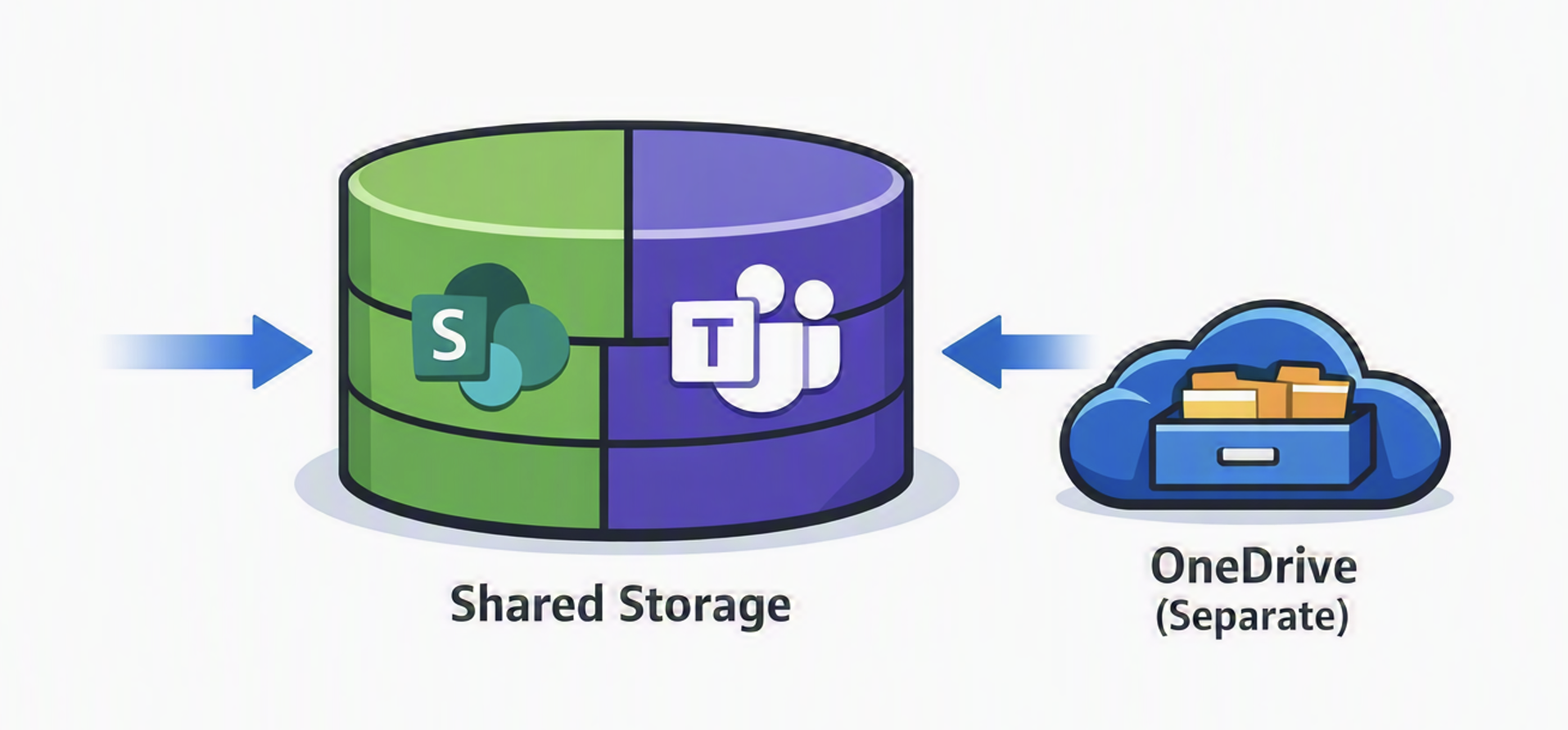
- Storage is shared across SharePoint and Teams-connected sites.
- Additional storage can be purchased if capacity is exceeded.
- Inactive content and version history are common causes of unnecessary storage growth.
- Cleanup can often delay or reduce additional storage purchases.
🔗 SharePoint storage cost per TB: when to buy more storage and when to clean up first
How much storage do you get with Microsoft 365?
Understanding SharePoint capacity starts with understanding how Microsoft allocates storage. SharePoint storage is managed as a pooled tenant-wide allocation that supports collaboration sites, communication sites and Teams-connected document libraries.
Because the allocation is shared across the environment, rapid growth in one area can affect available storage everywhere else.
Every Microsoft 365 tenant receives:
- 1 TB of base SharePoint storage
- +10 GB per licensed user
This pooled storage is shared across all SharePoint sites in your tenant, including those connected to Microsoft Teams.
📦 Example: A tenant with 150 users gets 2.5 TB of total SharePoint storage.
As organisations create more Teams, project sites and document libraries, storage consumption can grow much faster than expected.
How much does extra SharePoint storage cost?
Once a tenant exceeds its included storage allocation, additional storage can be purchased through Microsoft. Costs vary by licensing channel, geography and taxes, so administrators should always validate current pricing within their own Microsoft 365 environment before making purchasing decisions.
If you need more space, Microsoft offers additional storage at:
- $0.20 per GB per month
- Equivalent to $204 per TB per month
❗Note: In some markets, local taxes and currency conversions may influence the $0.20 per GB cost.
For a deeper analysis of storage economics, see SharePoint storage pricing (2026): Plans, add-ons, costs & options.
What counts towards SharePoint storage?
Many administrators assume that only active files contribute to storage consumption. In reality, a variety of content types contribute to SharePoint storage usage, including historical content that may no longer provide significant business value.
Storage consumption commonly comes from:
- Active documents
- Archived project documentation
- Microsoft Teams files
- Large media files
- Document versions
- Duplicate content
- Inactive files
- Inactive sites
- Recycle bin content awaiting permanent removal
Many organisations focusing only on active content overlook the storage impact of old versions and inactive files.
For a detailed breakdown, see What counts toward SharePoint storage space?
Why do Microsoft 365 tenants run out of SharePoint storage?
Most organisations do not hit storage limits because of a single event. Capacity problems usually emerge gradually as collaboration grows across the Microsoft 365 environment.
Common causes include:
- Uncontrolled Teams creation
- Long-running project sites
- Large document libraries
- Excessive version history
- Inactive content remaining indefinitely
- Duplicate workspaces
- Legacy migrated content
Over time, these factors can create substantial storage growth without organisations realising how much reclaimable capacity exists.
🔗 Why do Microsoft 365 tenants run out of SharePoint storage?
Should you buy more storage or clean up first?
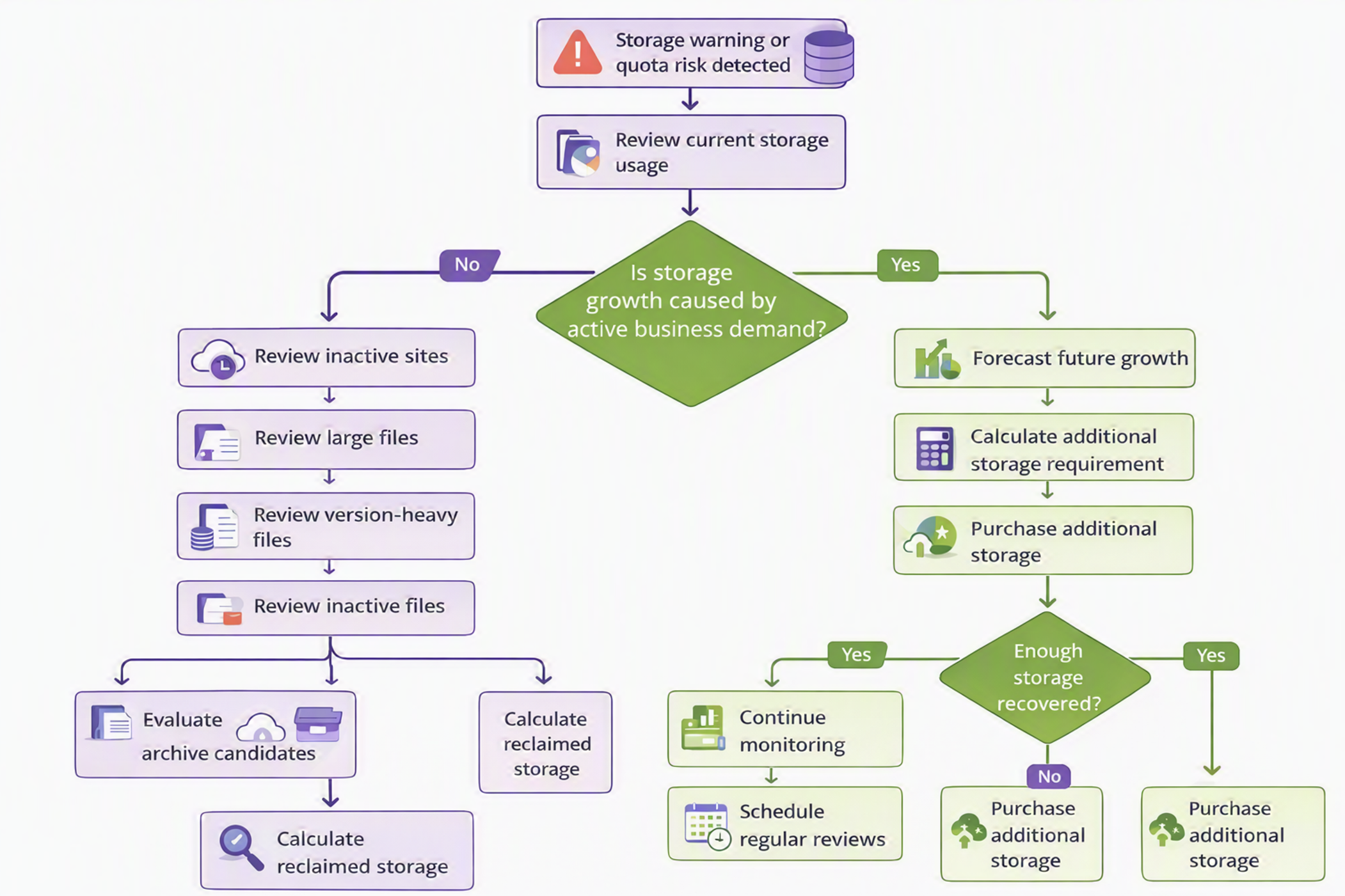
When storage is running low, purchasing additional capacity often appears to be the simplest solution. However, many organisations can reclaim significant storage before spending additional budget.
A practical review process is:
- Check current tenant storage usage
- Identify the largest sites
- Review inactive sites
- Identify large files
- Review version-heavy content
- Identify inactive files
- Consider archive opportunities
- Estimate future growth
- Decide whether additional storage is genuinely required
This approach improves both cost management and governance.
Calculate your SharePoint storage exposure
Before approving additional storage purchases, estimate how much storage growth is likely over the next year and compare that against potential cleanup savings.
Many organisations find that reducing inactive content, excessive versions and unused sites significantly lowers future storage requirements.
How can you check your current storage usage?
Understanding current usage is essential for proactive storage management. Microsoft provides tenant-wide storage reporting through the Microsoft 365 Admin Center and SharePoint Admin Center, allowing administrators to identify overall consumption and larger sites.
A storage review should include:
- Total tenant usage
- Remaining capacity
- Largest sites
- Fastest-growing sites
- Large files
- Version-heavy files
- Inactive files
- Inactive sites
The goal is not simply to measure consumption but to understand why storage is growing.
To see how much storage you're using:
- Go to Reports > Usage > SharePoint > Storage in the Microsoft 365 Admin Center
- Review total tenant usage and available space
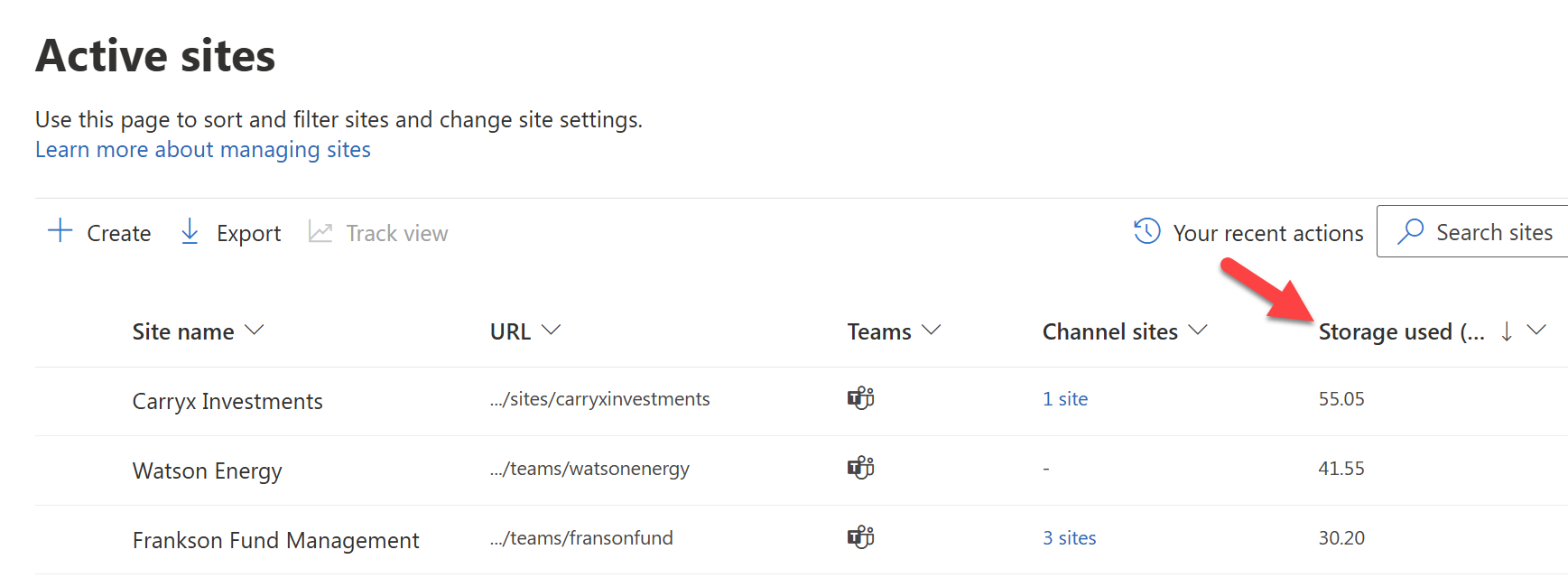
To identify which sites are consuming the most storage, use the Storage used column in the Active sites view in the SharePoint admin center.
SProbot can also help by:
- Generating detailed usage and growth reports
- Highlighting very large unused files
- Flagging version-heavy files consuming storage unnecessarily
- Recommending cleanup actions
How to avoid paying for more storage than you need
Before purchasing additional storage, review opportunities to reduce existing consumption. A structured cleanup process often produces immediate savings while improving SharePoint hygiene.
Consider these optimization strategies:
Archive inactive sites
- Identify sites with no recent activity
- Move or delete unused content
Trim version history
Delete large unused files
- Run reports to find oversized files
- Remove or relocate them to OneDrive or external storage
Identify inactive content inside active sites
- Run reports to find inactive files inside sites that are otherwise active
- Remove or relocate them to OneDrive or external storage
Empty the recycle bin
Deleted items still count toward your quota until permanently removed.
🔗 Related reading: 6 Ways to free up SharePoint storage
Planning for future growth
Storage growth is easier to manage when organisations take a proactive approach. Regular reviews help identify trends before capacity becomes a problem.
Recommended practices include:
- Forecast storage requirements
- Schedule periodic storage reviews
- Establish cleanup processes
- Monitor version growth
- Educate site owners
- Track inactive content
A combination of capacity planning and operational governance helps organisations avoid unnecessary storage costs in the future.
Conclusion
SharePoint storage is generous for many organisations initially, but growth in Teams, collaboration sites and document versions can eventually create capacity challenges. Before purchasing additional storage, organisations should understand what is consuming space and whether cleanup could reduce future costs.
The most effective approach is usually to assess reclaimable storage first, estimate future growth second and purchase additional capacity only when it is genuinely needed.
Try SProbot to see which sites and files are driving storage growth
Understanding where your storage is going is often harder than measuring how much storage has been consumed.
SProbot helps administrators identify large files, inactive content, version-heavy files and site-level storage trends so that cleanup decisions can be made with confidence.
FAQ
How much SharePoint storage do I get with Microsoft 365?
Microsoft allocates SharePoint storage at tenant level. The available capacity depends on your licensing and tenant configuration.
What counts towards SharePoint storage?
Files, Teams-connected content, version history, inactive content and recycle bin items can all contribute to storage consumption.
Can cleanup avoid buying additional SharePoint storage?
In many cases, yes. Organisations frequently find reclaimable storage in inactive sites, inactive files and excessive version history.
What is the biggest hidden contributor to storage growth?
Version history is often overlooked and can consume significant storage within heavily used document libraries.
When should I buy more SharePoint storage?
Additional storage is typically appropriate when active business growth requires more capacity and reasonable cleanup opportunities have already been reviewed.